Filing an eTDS return in Nepal isn’t just a procedural task, it serves several important legal, financial, and practical purposes for both the taxpayer and the government.
Why eTDS Return Must Be Filed in Nepal
Legal compliance with tax laws
Under the Income Tax Act of Nepal, any person or entity deducting tax at source is legally required to report it through an eTDS return to the Inland Revenue Department.
👉 If you deduct TDS but don’t file the return:
It is treated as non-compliance
You may face penalties and interest
Proof of tax deduction and deposit
The eTDS return acts as official evidence that:
You deducted tax from payments (salary, rent, service fees, etc.)
You deposited it to the government
👉 This protects you during:
Tax audits
Disputes with tax authorities
Credit to the deductee (very important)
When you file eTDS:
The deducted tax is recorded against the PAN of the deductee
👉 This allows the deductee to:
Claim tax credit while filing their income tax return
Avoid double taxation
Without eTDS filing, the deductee cannot claim the TDS credit properly.
Transparency and tracking by tax authority
eTDS helps the Inland Revenue Department:
Track who is deducting and depositing taxes
Match income declared by taxpayers
Reduce tax evasion
👉 It creates a digital audit trail of transactions.
Avoid penalties and fines
Failure to file eTDS on time can result in:
Late filing penalties
Interest on unpaid or unreported TDS
Possible legal notices
👉 Filing on time keeps your business risk-free and compliant.
Required for audits and financial reporting
During:
Internal audits
External audits
Tax assessments
👉 eTDS returns are checked to ensure:
Proper deduction
Proper deposit
Accurate reporting
Builds credibility and professionalism
Regular and accurate eTDS filing:
Shows your business follows proper tax discipline
Builds trust with:
Clients
Employees
Government authorities
Step-by-Step: How to File eTDS Return Online in Nepal
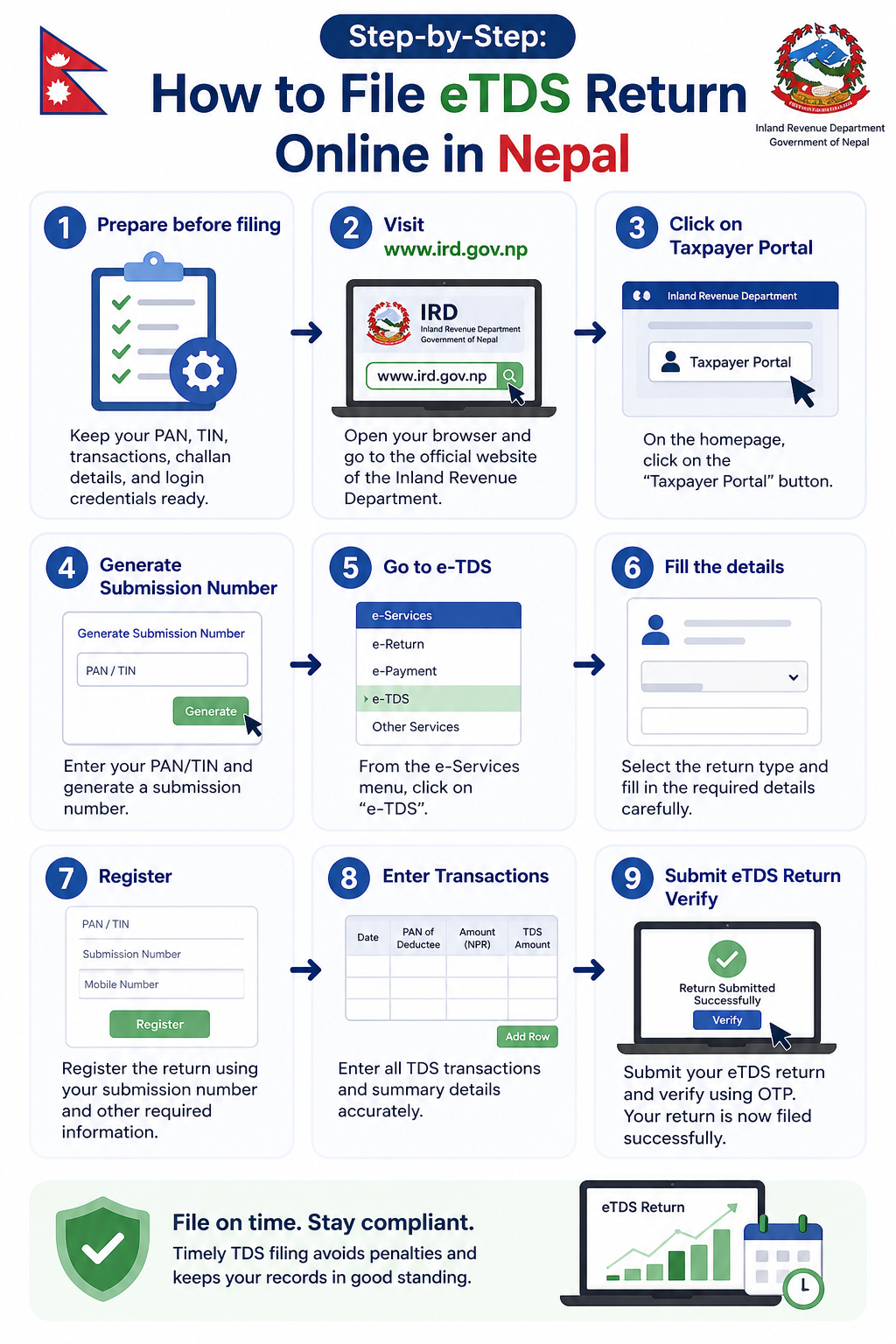
Prepare before filing
Before you start, make sure you have:
PAN (login credentials)
TDS payment voucher details (voucher no., date, bank)
Details of deductees (name, PAN, amount, TDS)
👉 Note: You must deposit TDS first before filing eTDS.
Go to IRD Taxpayer Portal
Visit: ird.gov.np
Click on Taxpayer Portal
Login using PAN and password
Generate Submission Number
Go to e-TDS → Register / Submission No.
Fill:
PAN (Username)
Withholdee PAN
Phone number
TDS period (e.g. Shrawan–Bhadra)
Click Register
👉 A Submission Number will be generated (very important).
Enter Transaction Details
Click “Enter Transactions”
Fill for each payment:
Deductee PAN
Payment amount
TDS amount
Date of deduction
👉 You can also upload Excel/XML for bulk entries.
Add Voucher Details
Enter:
Voucher number
Voucher date
Bank name
Payment method
👉 These details must match your TDS payment.
Submit eTDS Return
Review all entries carefully
Click Submit
Verify (IMPORTANT STEP)
Go to Verification → TDS
Enter your Submission Number
Check details and click Verify
👉 Without verification, filing is NOT complete.
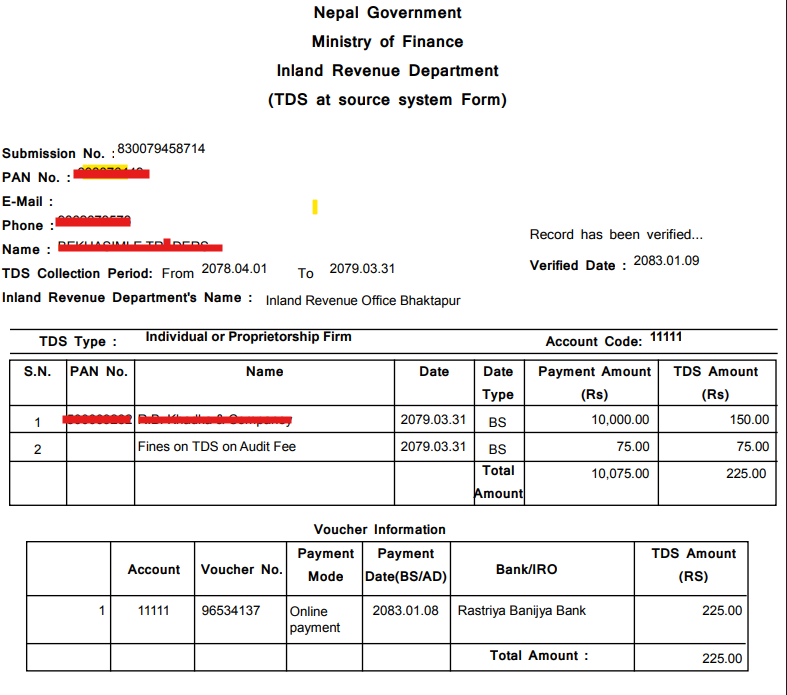
Deadline
Must be filed within 25 days after the end of each month
Common Mistakes to Avoid
Filing without depositing TDS
Wrong PAN of deductee
Incorrect voucher details
Forgetting to verify
Pro Tips
Always keep voucher number & submission number saved
Use Excel upload for multiple employees/vendors
Once verified, you cannot edit online, you must visit IRD office
FAQs on eTDS Return in Nepal
What is an eTDS return?
An eTDS return is an online statement filed with the Inland Revenue Department that reports:
Tax deducted at source (TDS)
Details of deductees
Amount deposited to the government
👉 It ensures proper tracking of tax deductions.
Who is required to file eTDS return?
Any person or entity that deducts tax at source must file eTDS, including:
Employers (salary TDS)
Businesses paying rent, interest, or service fees
Government and private organizations
👉 If you deduct TDS, filing is mandatory.
3. What is the deadline for filing eTDS?
eTDS return must be filed:
Within 25 days after the end of each Nepali month
👉 Late filing may result in penalties and interest.
4. What happens if eTDS is not filed?
If you fail to file:
Deductee may not get tax credit
Penalties and interest may apply
You may receive notices from the Inland Revenue Department
👉 Non-filing creates both legal and financial risks.
5. Can eTDS be revised after submission?
Once verified, eTDS cannot be edited online
Corrections usually require:
Visiting the tax office
Requesting amendment
👉 Always double-check before verification.