In recent years, social media has become one of the most powerful communication tools in Nepal. Platforms like Facebook, TikTok, Instagram, and YouTube are not only used for entertainment but also for business, education, and social awareness. However, with the rapid growth of these platforms, the Government of Nepal has introduced a registration requirement for social media sites to ensure accountability, security, and proper regulation.
This article explores the registered social media sites in Nepal, their legal framework, benefits, challenges, and what the future looks like for digital platforms.
What Does “Registered Social Media Site” Mean in Nepal?
A registered social media site refers to a digital platform that has officially complied with Nepal’s regulatory requirements. According to the directives issued by the Ministry of Communication and Information Technology, all international and local social media companies must register their platforms with the Department of Information Technology (DoIT) in Nepal.
This means platforms must provide official contact details, a local representative, and comply with government policies related to user safety, data privacy, and online content monitoring.
Legal Framework for Social Media Registration in Nepal
The registration of social media platforms falls under the Electronic Transaction Act (ETA), 2006 and directives issued by the Nepal Telecommunications Authority (NTA). The legal provisions are mainly focused on:
Preventing the spread of fake news, hate speech, and harmful content.
Ensuring social media companies cooperate with law enforcement when needed.
Protecting users from online fraud, harassment, and cybercrimes.
Maintaining accountability of global platforms operating in Nepal.
Why the Nepal Government Registers Social Media Platforms?
The government’s primary goal in registering social media sites is to establish digital governance. Registration ensures:
Better regulation of online content.
Protection of users’ rights.
Collection of taxes from international digital companies.
Improved cyber security and prevention of illegal activities.
List of Registered and Unregistered Social Media Sites in Nepal
Several globally popular platforms have already registered or are in the process of being registered in Nepal. These include:
Facebook Registration in Nepal
Facebook is the most widely used social media platform in Nepal with millions of active users. It is in the process of registration under Nepal’s framework to comply with government rules on online content and user data handling.
TikTok Registration in Nepal
TikTok has rapidly gained popularity in Nepal, especially among youth. Despite some controversies, TikTok is officially registered in Nepal and operates under government guidelines.
Instagram Registration in Nepal
Instagram, a subsidiary of Meta, is in the process of registration in Nepal. It is widely used for personal branding, business promotion, and content creation.
YouTube Registration in Nepal
YouTube, owned by Google, is one of the most important platforms in Nepal for learning, entertainment, and business. It is not a registered platform and subject to Nepali digital laws.
If you’re interested in exploring how digital creators make money online, check out our detailed guide on how YouTubers earn in Nepal, including monetization methods, ads, sponsorships, and the tax rules every creator should know.
Twitter (X) Registration in Nepal
Twitter (rebranded as X) is also not registered in Nepal. It is commonly used for news updates, political discussions, and professional networking.
WhatsApp Registration in Nepal
WhatsApp, another product of Meta, is widely used in Nepal for communication. It is in the process of registration and operates in compliance with Nepali communication policies.
Viber Registration in Nepal
Viber is particularly popular in Nepal for free messaging and calls. It has registered with the Nepali authorities and remains a trusted communication tool.
Hamro Patro Registration in Nepal
Hamro Patro is particularly popular in Nepal for Hamro Patro is popular in Nepal because it offers calendar, news, radio, horoscope, finance, health, and community features like an all-in-one app connecting Nepalis worldwide.Hamro Patro applied for registration on September 4, 2025, immediately after the government’s announcement to deactivate unregistered social media platforms and get registered as social media in Nepal.
Other Popular Registered Platforms in Nepal
Other platforms such as LinkedIn, Messenger, and Snapchat have also aligned with the registration requirements.
Process of Social Media Registration in Nepal
Who Regulates Social Media in Nepal?
The Ministry of Communication and Information Technology (MoCIT) and the Nepal Telecommunications Authority (NTA) oversee social media regulation.
Requirements for Social Media Platforms to Operate Legally
To register, platforms must:
Appoint a local representative in Nepal.
Provide contact details for coordination with authorities.
Agree to remove harmful content when requested by the government.
Ensure data protection and privacy measures.
Steps for International Platforms to Register in Nepal
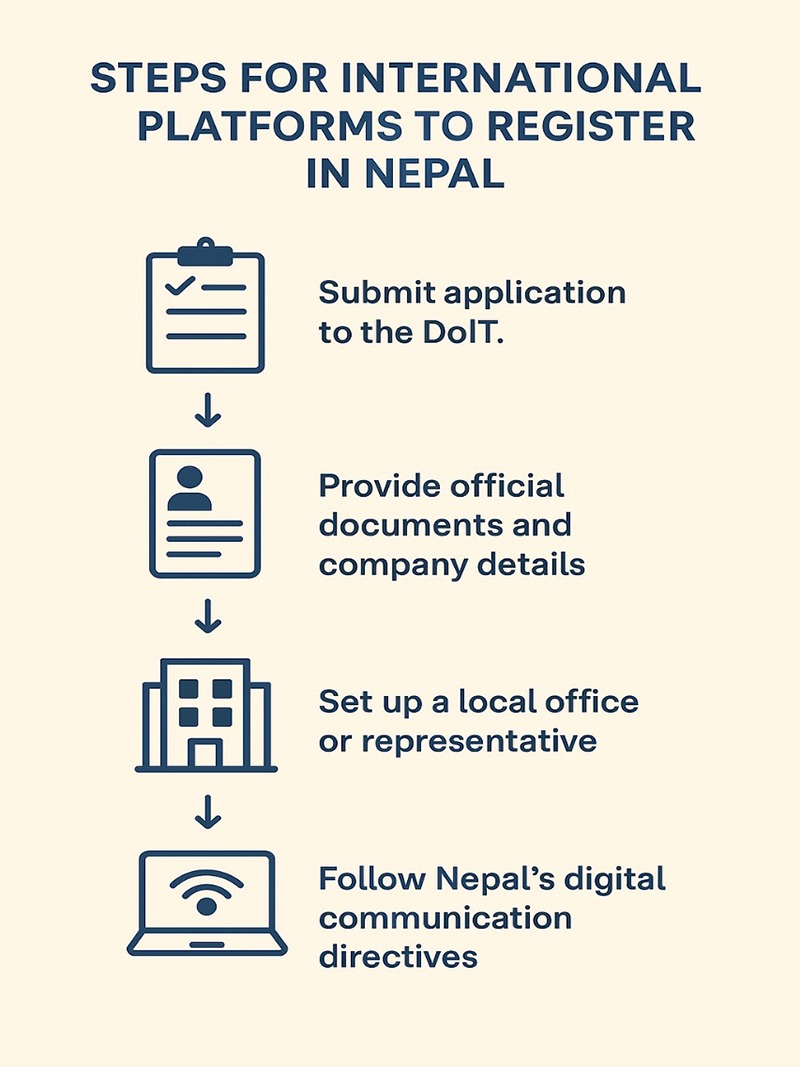
Submit application to the DoIT.
Provide official documents and company details.
Set up a local office or representative.
Follow Nepal’s digital communication directives.
Benefits of Registered Social Media Sites in Nepal
Ensuring User Safety and Privacy
Registration ensures that companies are responsible for protecting user data and privacy.
Government Monitoring and Accountability
With registration, the government can request platforms to remove harmful or illegal content, ensuring a safer digital space.
Preventing Fake News and Misuse
Registered sites are accountable for content moderation, which helps reduce the spread of misinformation.
Challenges with Social Media Registration in Nepal
Concerns Over Free Speech
Critics argue that strict regulations may limit freedom of expression online.
Technical and Legal Barriers for Platforms
Some smaller platforms may struggle with the cost and process of registration.
Public Response to Registration Rules
While some users welcome the move for safety reasons, others worry it might lead to overregulation.
Future of Social Media Regulation in Nepal
Upcoming Policies and Digital Laws
Nepal is expected to introduce a Digital Nepal Act which will further regulate online platforms and digital businesses.
Impact on Businesses and Content Creators
Registration ensures that businesses and content creators can operate legally and safely, but it may also require them to comply with stricter rules.
Predictions for Social Media Growth in Nepal
Despite challenges, the popularity of social media in Nepal will continue to rise. With registration, the platforms will become more secure, transparent, and user-friendly.
Conclusion
The registration of social media sites in Nepal marks a new era of digital governance. Platforms like Facebook, TikTok, YouTube, and Instagram are now more accountable to both the government and the users. While there are concerns about free speech and strict regulations, the move is a step toward ensuring a safer and more responsible digital environment in Nepal.
As the country embraces digital transformation, registered social media platforms will play a vital role in shaping Nepal’s social, cultural, and economic future.