In Nepal, a VAT bill includes a 13% tax on goods and services and is issued by businesses registered under Value Added Tax. A PAN bill is issued by businesses that are not VAT registered and does not include this tax. Both bills are legally required for proper tax compliance.
What Is a VAT Bill?
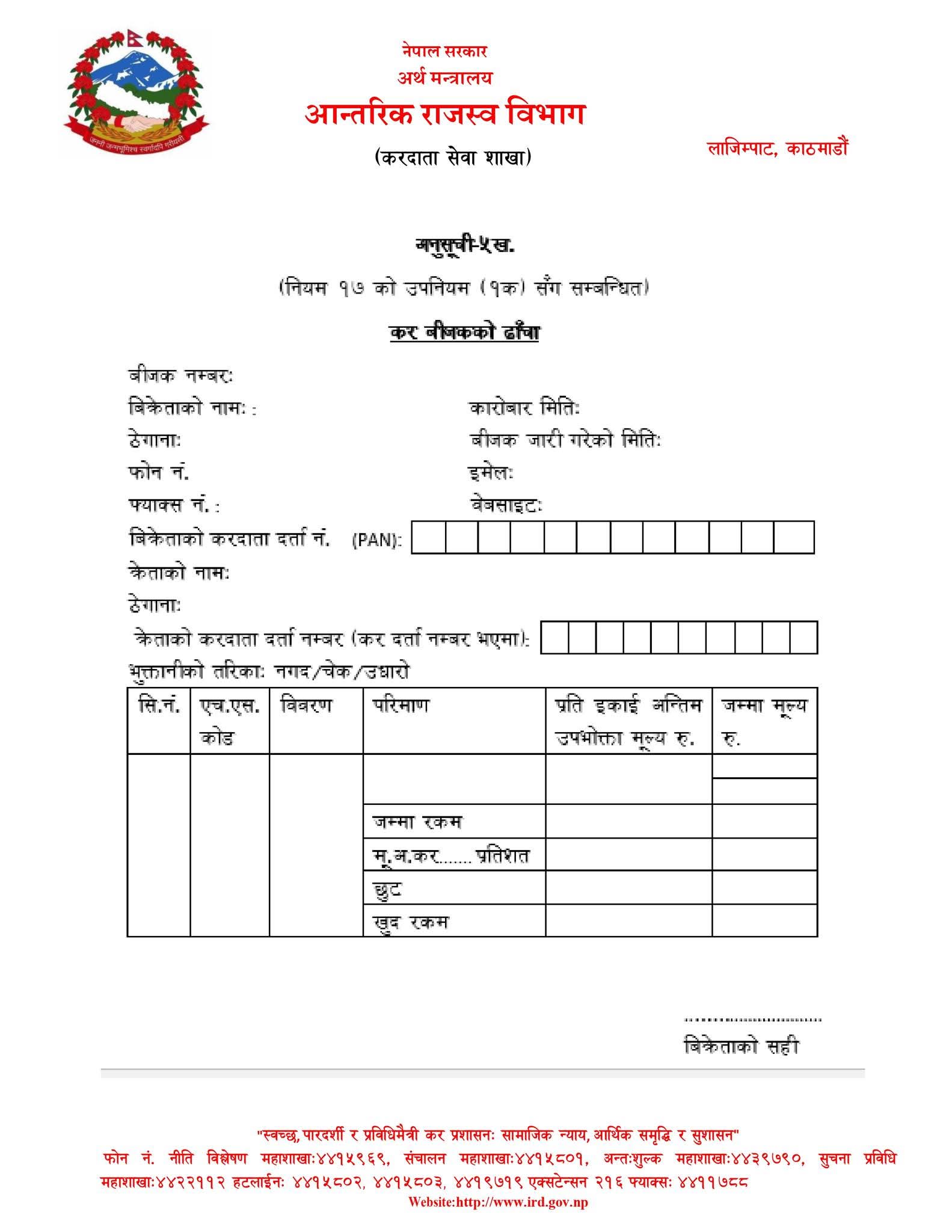
A VAT bill is a tax invoice issued by a business that is registered under Value Added Tax (VAT). It includes an additional 13% VAT on the total price of goods or services.
This type of bill is mandatory for businesses that cross the government’s turnover threshold. A VAT bill allows the government to track taxes and also enables businesses to claim tax credits on their purchases.
What Is a PAN Bill?
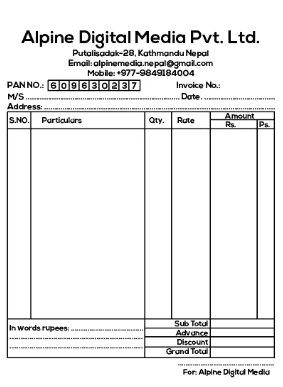
A PAN bill is an invoice issued by a business or individual who is registered with a Permanent Account Number (PAN) but is not registered for VAT.
It does not include VAT. However, it is still a valid legal document used to record income and maintain tax compliance.
Key Difference Between VAT Bill and PAN Bill
A VAT bill includes 13% VAT, while a PAN bill does not include tax.
VAT bills are issued by VAT-registered businesses, while PAN bills are issued by PAN-registered entities.
VAT allows businesses to claim input tax credit, but PAN billing does not.
VAT registration is required once a business crosses the government threshold, while PAN registration is mandatory for all businesses.
VAT vs PAN Bill Comparison Table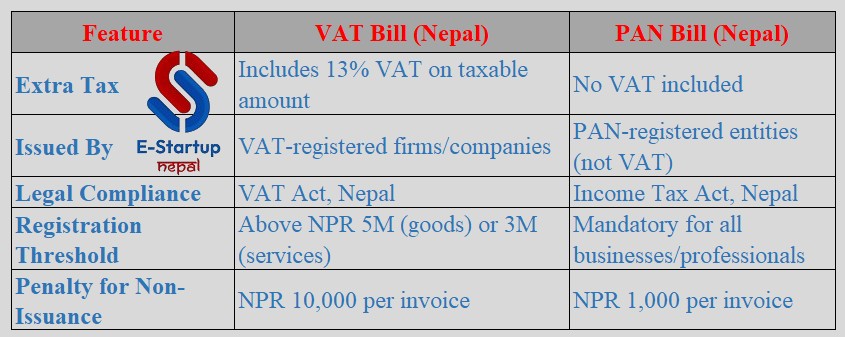 VAT Vs PAN in Nepal.jpg 83.32 KB
When Is VAT Bill Mandatory in Nepal?
A VAT bill becomes mandatory when a business is required to register for VAT under Nepal’s tax laws. Once registered, the business must issue a VAT bill for every taxable sale.
A business must register for VAT if its annual turnover exceeds:
NPR 50 lakhs from goods (trading or manufacturing)
NPR 30 lakhs from services
NPR 30 lakhs if the business involves both goods and services
These thresholds are set by the Inland Revenue Department and apply to most businesses operating in Nepal.
Situations Where VAT Bill Is Mandatory
A VAT bill must be issued in the following cases:
1. When your business is VAT registered
Once registered for VAT, you cannot issue a PAN bill. You must issue a VAT bill for all taxable transactions, even for small amounts.
2. When selling taxable goods or services
If your products or services fall under VAT-applicable categories, you must charge 13% VAT and issue a VAT bill.
3. When dealing with VAT-registered customers
If your client is also VAT registered, they will require a VAT bill to claim input tax credit. In such cases, issuing a VAT bill is essential.
4. When your business crosses the threshold during the year
If your turnover exceeds the limit at any point, you must apply for VAT registration. After registration, all future transactions must include VAT billing.
Fines and Penalties for Not Issuing Proper Bills
Fine of NPR 1,000 per invoice for PAN bill
Fine of NPR 10,000 per invoice for VAT bill
Additional penalties or business closure
Proper record-keeping is essential for PAN and VAT compliance. Learn more about how professional Bookkeeping Services in Nepal can help your business stay compliant.
Mandatory Information in a VAT Bill
Seller's name, address, and VAT number
Buyer's name (if applicable)
Bill number and date
Description of goods/services
Quantity and rate
VAT amount and total
What Should Be Included in a PAN Bill?
Seller's name, address, and PAN number
Bill number and date
Description of transaction
Amount (without VAT)
Importance of Issuing Correct Bills
How Proper Billing Helps Tax Compliance
Issuing PAN or VAT bills helps the government track transactions, ensures businesses pay the right taxes, and keeps financial records transparent.
Impact on Buyers and Sellers
Buyers can claim input VAT (if eligible).
Sellers maintain legal compliance and avoid tax evasion allegations.
Government Monitoring and Enforcement
The Inland Revenue Department (IRD) uses systems to monitor non-compliance. Random inspections, electronic billing checks, and audit trails are becoming more common. Learn more at the IRD Nepal official website.
How to Issue VAT and PAN Bills in Nepal
Manual Billing Process
Traditional businesses may issue hand-written or printed bills using invoice books approved by the IRD.
Electronic Billing and IRD Guidelines
The government now encourages real-time electronic billing systems linked to the IRD for transparency and record keeping.
Using Billing Software for Compliance
Many businesses use accounting and billing software that auto-generates VAT/PAN bills and syncs with IRD servers for reporting and compliance.
Common Challenges and Solutions
Mistakes While Issuing VAT/PAN Bills
Omitting PAN/VAT numbers
Not breaking down VAT
Backdating or duplicate billing
Solution: Train staff and regularly audit invoices.
Dealing with Fake or Invalid Bills
Fake bills can lead to legal trouble. Always verify seller registration and use verified billing systems. Verify PAN numbers on the IRD portal.
Best Practices for Accurate Billing
Use serially numbered invoices
Keep digital and physical copies
Reconcile sales with VAT returns
Frequently Asked Questions (FAQs)
Who Should Issue VAT Bills in Nepal?
Businesses with an annual turnover above NPR 5 million of goods or an annual turnover above NPR 3 million of services or both are mandatorily required to register for VAT and issue VAT bills on every sale.
Who Needs to Issue PAN Bills?
Those with turnover below the VAT threshold but conducting business or providing services must register for PAN and issue PAN bills accordingly.
Is PAN bill mandatory for all transactions?
Yes, every business must issue either a PAN or VAT bill depending on their registration status even for small transactions.
Is there a limit for issuing PAN bill?
There is no limitation in issuing PAN bill.
When should I issue a VAT bill instead of PAN?
If your business is VAT-registered, you must issue VAT bills for all taxable supplies, regardless of the amount.
What happens if I don't issue a PAN or VAT bill?
You may face fines, audits, or even suspension of business operations by the Inland Revenue Department.
Bottom Line
Properly issuing VAT and PAN bills in Nepal isn't just a legal obligation, it's a sign of professionalism and transparency. Whether you're a startup, a retail shop, or a service provider, adopting good billing practices will protect your business, avoid penalties, and contribute to national tax compliance.
Need help with VAT or PAN registration and billing setup in Nepal?
📞 Contact eStartup Nepal today for expert assistance!